
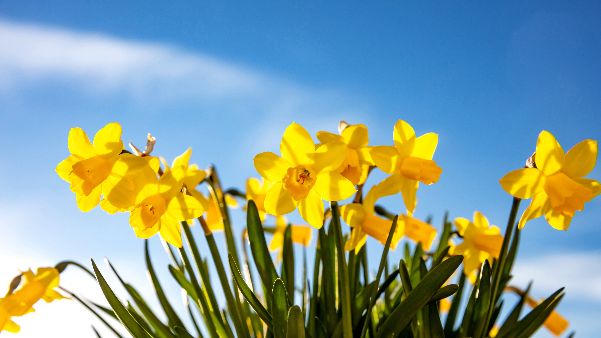
I think the month of March got itself a little confused this year – it’s supposed to go out like a lamb, but the wind the last few days was definitely much more lion-like! Of course, the weather throughout the whole month was anything but normal – but I’m not complaining! All those warmer, sunnier days last month were just what we all needed. I think today’s weather is Mother Nature’s idea of an April Fool’s joke, but, even though the next few days are a bit of a step back, it doesn’t look like the chillier temps are going to last very long. Which is just wonderful, since I am in a serious gardening mood!
Jennifer
In this month’s issue of Let’s Get Gardening
Subscribe to our monthly newsletter for seasonal gardening advice and recommendations for your garden, yard, and bird feeding.
In this month’s issue:
If you are also in the mood to garden, you’re in luck – there’s lots that we can be doing, both indoors and out, this month!
- If you haven’t gotten around to it yet, test your soil before you start planting. We have two very easy and reliable testing kits in stock – one that offers a digital readout of results, and one that is a little more manual, but still easy to use. Your soil conditions change over time, so it’s best to test it every year.
- Make sure your garden tools are ready for the season. You’ll have an easier time of it if you sharpen, clean, and lubricate pruners, and loppers. Shovels will also work better – taking less effort on your part – if sharpened. Check gloves and garden hoses for holes, and replace if necessary (all gloves are on sale at The Garden Mill this month, both in-store and online).
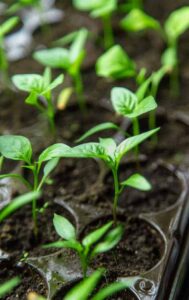 This weekend, start pepper and tomato seeds indoors, so they will be ready to put out in your garden in about eight weeks. Eggplant should be started about a week later than the other two, and gets put out in the garden about a week later, as well.
- Pull mulch away from plants that are starting to poke up out of the ground as it warms up to help the soil warm up more quickly. Plan to cover the plants back up if temps head below freezing at night again. Add a top dressing of compost to your soil, after you pull the mulch back, to help improve soil structure and fertility.
- With all the wind we’ve had, there are bound to be branches that have fallen in your yard. Get those cleaned up, along with any driveway gravel that may have been plowed onto the lawn that one time we had snow this winter, in order to make lawn-mowing easier, when it’s time. Rake up leaves that are on the lawn as well.
- Also wait until daytime temperatures are consistently in the 50’s to cut back grasses and most perennials that you left standing over the winter. The reason to wait until it has warmed up is to give the beneficial insects that have spent the winter in the hollow stems and on the leaves of your plants a chance to wake up.
- Wait to cut back semi-woody and woody perennials until the end of the month, then decide how much you want to trim based on where you see new growth, and how you want the plant to appear.
- Apply weed preventer to your lawn this month to keep the seeds of dandelion, crab grass, and other weeds from putting down roots when they germinate.
- Some things can go into your garden earlier than many others. Peas, lettuce, and spinach can be planted as
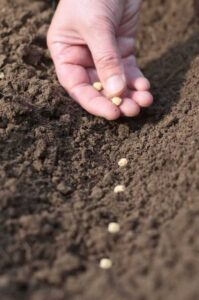 soon as the soil is workable. Carrots, radishes, and beets can go in once the soil temperature is above 40°. Don’t plant all that you want of these crops at once, though.
 - The simple way to tell if your soil is ready to be worked in (and on) is to take a handful of soil and squeeze it. When you open your hand, if the ball stays together, it’s too wet. If it falls apart and is a bit crumbly, then it’s safe to venture into the garden.
- Cabbage and kale transplants, as well as onion sets, can generally go out by mid-month; broccoli and cauliflower transplants should be OK to go out by the end of the month.
- Pansies and primrose can go in flower beds and containers outside now, but keep row covers handy – it is Michigan, after all.
- Around the end of the month or early in May, if it looks like we have seen the end of frost, divide summer-blooming perennials that you didn’t get to in the fall (you can divide spring-bloomers, but they may not bloom this spring).
- Plant dormant trees and shrubs once the soil can be worked. To make sure you’re giving your trees and shrubs have the best chance at survival, be sure to plant them properly.
For the birds:
- If you’re interested in attracting bluebirds to your yard, the Michigan Bluebird Society has lots of great tips.
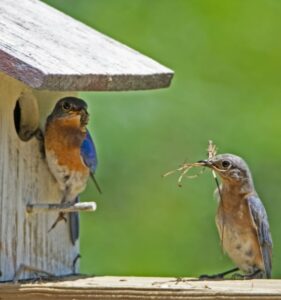 You can also find out what it takes to be a purple martin landlord with information from the Purple Martin Conservation Association.
 - Check existing birdhouses before cleaning them out to make sure they aren’t already being occupied.
- If you’re considering putting out nesting materials for your birds, be sure to check out the Audubon Society’s website to learn the do’s and don’ts first.
- I have seen a number of pictures from people in Michigan who have spotted Northern Orioles at feeders already this year, which surprises me, because I don’t typically think of them as being here this early.
- I have not seen any evidence of hummingbirds yet, though. Generally, we start seeing them in mid-April to early May. If you’d like to track them as they travel north, you can do that at this website.
More info on all of these tips can be found in our monthly newsletter: Read the April 2021 issue of Let’s Get Gardening
Happy Gardening!
All Gardening Gloves are
On Sale All Month!

In Store and Online. While Supplies Last.
Cannot be combined with any other offers.
Store News & Specials
$10 off $50 purchase coupon