
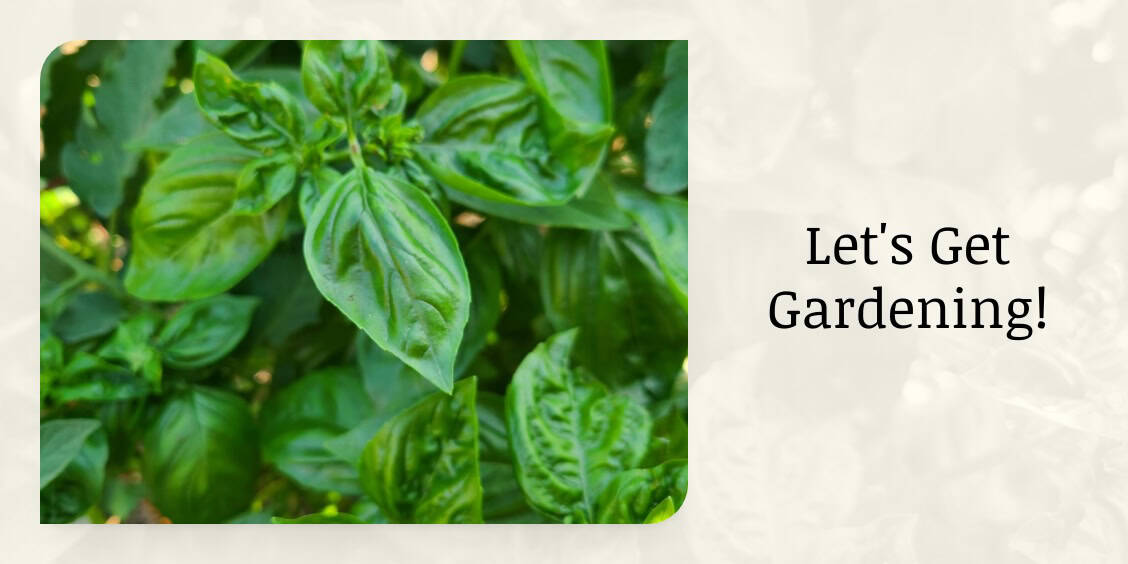
How has your garden been growing this year? If some of my conversations with friends and customers are anything to go by, it’s been a great gardening season for most people so far for most everyone. I don’t know about you, but my tomato plants are incredibly robust, my pepper plants are covered in peppers, my cucumbers and pole beans are climbing for the sky, and I have no idea what I’m going to do with all the basil I have! Oh yeah – and my flower gardens are absolutely filled with blooms that the bees and butterflies just can’t get enough of. Sometimes, being a gardener can be so incredibly rewarding.
Jennifer
This month’s issue of Let’s Get Gardening
Subscribe to our monthly newsletter for seasonal gardening advice and recommendations for your garden, yard, and bird feeding.
There are, of course, some things about gardening that are not so fun, like dealing with all the insects and diseases that generally are in full force in August. The Japanese Beetles have been plaguing everyone I talk to for a while now, but some of our other not-so-favorite Insects are just now really starting to show up in large numbers – tomato hornworms, cucumber beetles, Mexican bean beetles, squash bugs and grasshoppers, to name a few. With all the humidity we have had, diseases are also starting to impact gardeners in our area. So, while you’re enjoying the bounty of your gardens, be sure to keep an eye out for the problems that might reduce that bounty!
- Different insect pests require different tactics for dealing with them. For tomato hornworms, I like to simply pluck them off the plants and put them in my birdfeeders – it’s a win-win for both me and the birds! I do the same with larger cabbage moth caterpillars. If you don’t like the idea of picking caterpillars off your plants, the best option is to spray with B.t.(Bacillus thuringiensis).
- If you have issues with other pests, such as flea beetles, spider mites, thrips, leaf miners, and others, insecticides that contain Spinosad can be very effective at controlling them. Another warning, though – it can be very toxic to bees and butterflies, so be careful to only spray the plants you are trying to protect from pests, spray in the evening to reduce the likelihood that bees will be out, avoid spraying flowers of any plants you are treating, and don’t spray to the point that it is dripping off the plants.
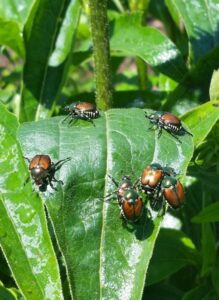
Japanese Beetles - Because they will eat almost anything, and can often be found in the flowers of plants, the best way to deal with Japanese beetles without risking harming the beneficial insects in your garden is to knock them off the plants into a bucket of soapy water, and leave them to drown. It’s best to do this daily, so that you don’t end up with an out-of-control population. Once a few of them find something they like in your gardens, they send out a signal to all their buddies to invite them to join in.
- Another reason to not tolerate Japanese beetles is that the females will lay their eggs in your lawn, and in short order, you will have grubs chewing up the roots of your grass. The more beetles that survive to lay eggs, the more grubs you will have, and the more damage those grubs will do to your lawn. One thing that August’s usual dry weather is good for is that dry soil makes it hard for the female to lay her eggs. So, consider not watering your lawn while the beetles are active.
- While we are sort-of on the topic of lawns, with the lower rainfall that August typically brings, lawns need a little different care than they needed when we were getting rain constantly. Your lawn is not going to grow as quickly, so it doesn’t need to be mowed as frequently.
- We have been pretty fortunate to have had a decent amount of rain much of the spring and summer, but at least at my house, the last couple of weeks have seen a definite slowdown in the rainfall. If you aren’t seeing at least an inch of rain each week at your house, you will probably want to give you gardens some supplemental water, especially vegetable gardens and newly-planted flowers, shrubs, and trees. This is even more important for container gardens, which dry out more quickly as they start to fill up with roots in the later part of the season.
-
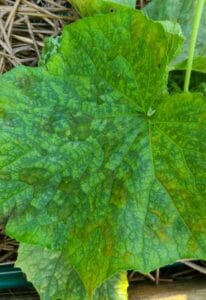
Cucumber Downy Mildew If you have not yet seen any signs of disease in your gardens, count yourself lucky, but don’t get complacent –they are out there, and they will find your garden! I am starting to see some signs of disease in my tomatoes and cucumbers, so have picked up my spraying regimen and am alternating a copper spray with the fungicide I have been using. This is the regimen recommended by the Missouri Botanical Gardens for dealing with both fungal and bacterial diseases, which can be hard to distinguish between, in their guide to tomato problems.
- One more thing about helping to control diseases in your gardens – airflow is very important. If your garden growing with lots of plants crowded together, the likelihood of diseases getting going goes way up. Trimming plants back to allow for more air to get through will help keep diseases under control.
- The best part of August is that we get to harvest so much great stuff to eat from our gardens! My garden is a little late in producing because I was way late in getting things planted, but it’s just a matter of time before I’ll be picking all the tomatoes, peppers, beans, cucumbers, and zucchini that are in my garden. The eggplant is a little farther behind, but I should be enjoying those before too long as well. Be sure to harvest your beans, cucumbers, and zucchini regularly so that the plants keep producing more.
- You can extend your harvest by planting some things now that will be ready to pick before the cold weather really sets in. Some things, like kale, will even last well into the chilly temps. August is a great time to plant beets, radishes, lettuces, spinach, Swiss chard, kale, and peas for harvest into the early fall. Check your seed packet for the “days to maturity” to determine how late you can plant and still harvest before frost sets in. To figure out your safe planting timeframe, just count backwards from your average first date of frost – usually between October 1st and 15th.
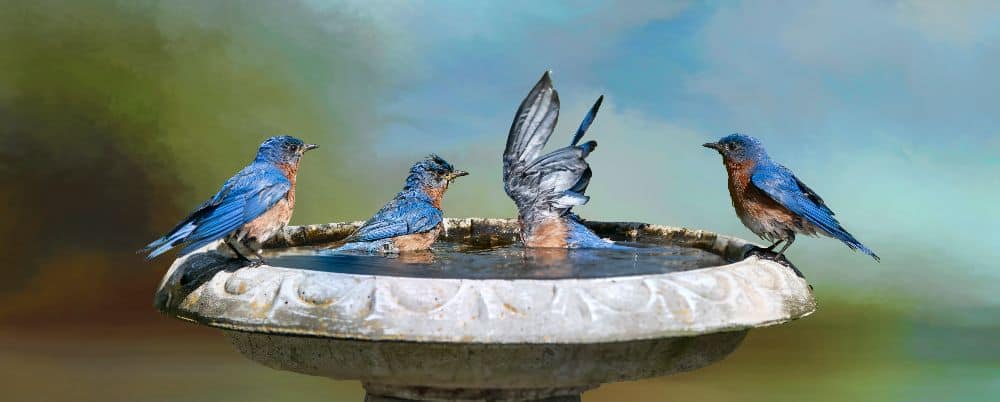
Bluebirds in Bath - Be sure to keep your bird baths cleaned and filled to provide a good, clean, reliable source of water for the birds. If you are feeding hummingbirds (if not, why not – they are so fun to watch!), keep their feeders cleaned out and filled at least weekly, and more often when we are having higher temps.
If you are looking for something for the whole family to do this month, I highly recommend checking out the Birds, Blooms and Butterflies Festival at Dahlem Center in Jackson on August 10th.
Read More
More info on all of these tips can be found in our monthly newsletter: Read the full August 2024 issue of Let’s Get Gardening
Happy Gardening!

Come in or Shop Online to find over 100 items at 50% Off, and we’ll be adding more items to the sale every week between now and the end of the summer!
Don’t miss out on some great finds. But hurry – once they’re gone, they’re gone for good!
$10 off any $50 purchase

Expires 8/31/24
Cannot be combined with any other offer.
Not valid on artist consignment items.
Cannot be used to purchase gift certificates.