Let’s Get Watering!
So, the weather people have a new one for us – we are apparently in an “Omega Blocking Pattern.” Ok – it’s probably not really new. They have likely called it this for a long time, but I can’t say that I’ve ever heard the term. So, I had to go look it up. According to weather.gov, “Omega blocks get their name because the upper air pattern looks like the Greek letter omega (Ω). Omega blocks are a combination of two cutoff lows with one blocking high sandwiched between them.” We are apparently going to be stuck in that “high sandwich” for a while, which means we will be getting very hot and dry conditions for the foreseeable future. Not my favorite kind of weather!
Jennifer
I both love being a gardener in July and hate it. I love it because so much is going on in the garden this month – lots of veggies are starting to be harvested, other vegetable plants get started indoors or seeds planted in the garden outside this month, and flowers are blooming all over. I hate it because I really don’t like the heat that we tend to get this month – it makes me not want to go out into my gardens except in the early morning and evening, when it’s not quite so breath-takingly hot. Of course, I tend to get going on garden tasks in the morning, and get so involved that I don’t realize how hot it’s gotten (or how late) until I am parched and sweaty. I don’t know about you, but for me, it’s very easy to lose track of everything else when I’m in my garden!
Here’s how you can lose track of time in your garden this month.
In the veggie garden:
- July should be harvest time for many crops. Spring crops, such as lettuce, spinach, and peas will mostly finish
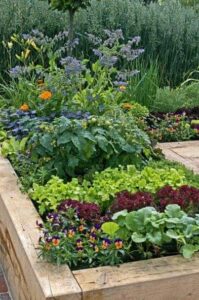 producing this month – if they haven’t already – while summer crops, such as zucchini, cucumbers, and early tomatoes will just start to come in by the end of the month.
 - July is also a time for planting and starting new seedlings for fall harvest. If you want to have broccoli and cabbage for fall, start your own indoors between now and July 10th, so the seedlings will be ready for transplanting into your garden when they are six weeks old.
- You can plant late season successions of lettuce, spinach, peas, beets, carrots, and Swiss chard at the end of the month, to be ready for picking before it gets too cold.
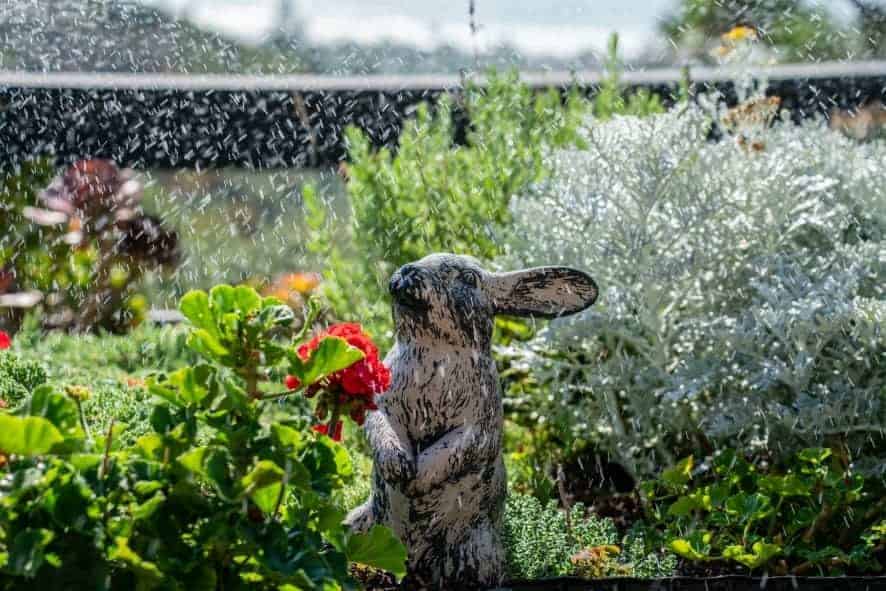
- Don’t forget to water your veggie garden regularly. Your plants generally need about an inch of water every week, and we certainly are not getting that! A good soaking once a week is better than a little bit every day or two, but when the temps are high, you might want to water a little more often.
- Side dress your summer crops this month. Side dressing is just the simple act of giving your plants a mid-season boost of fertilizer, such as Espoma’s Garden-Tone. It provides the plants with a little extra food when they need it most – as they are producing flowers and fruit. By the time they are ready to start putting out flowers, the plants have used up most of the available nutrition in your garden.
- Weed! I know – it’s pretty much nobody’s idea of a good time (though it is one of those things that makes the time just disappear), but it really is necessary.
- Pests of all sorts have been driving me nuts this year in my gardens. I’ve been waging a losing battle with chipmunks in my veggie garden all spring (though I hope that they are about to lose that battle, as I have a new product that I’m going to put to the test this weekend!). I’m also seeing cabbage worms on my kale, slugs on my lettuce, flea beetles on my eggplant, and grasshoppers on pretty much everything – especially my peppers.
- Keep up with your program of fungicide spraying (or start now, if you haven’t already). There are a lot of diseases that really get going as summer progresses, especially on tomatoes, cucumbers, and squash.
In the flower garden:
- Keeping your flower beds watered is probably going to be your biggest task this month. Just like with the vegetable garden, your flower beds need about an inch of water per week, or a little more when it’s really hot, like it’s going to be for the next little bit.
- Insects and other pests are as much of an issue in flower beds as in veggie gardens, so keep an eye out for damage, and try to get to the pests before the damage is too extensive. Mostly, I’m seeing leaf hoppers in my garden, but a friend recently told me he is being plagued by Japanese beetles.
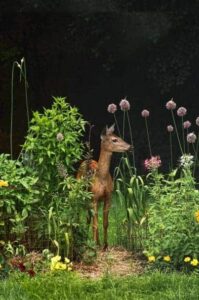
- The other pests I have been having problems with in my flower beds this spring are deer. They seem to think I have planted all the beautiful flowering plants in my beds just for them, even though there is plenty of other vegetation they can eat all around my property (and surrounding fields and woods).
- Be sure to fertilize roses throughout the month, but stop fertilizing at the end of the month to allow the new growth to harden off before winter. Also remove diseased leaves immediately, and pick up any that have fallen. These tasks, along with regular fungicide spraying will help keep your roses healthy. Aphids, mites, and Japanese beetles tend to be the biggest pest problems for roses.
- Keep weeds under control, as they compete with your flowers for moisture and nutrients.
- Cut back perennials that have finished blooming.
- Do you have a bare spot in your garden that you want to fill in quickly? Zinnia seeds planted this weekend will come up in a matter of days in the heat of July, will start producing blooms in just a few weeks, and will provide a beautiful late season show.
- To keep your potted annual flowers looking great all summer long, water them frequently (most likely daily in this heat), and be sure to fertilize them.
Trees & Shrubs:
- Regularly water any trees and shrubs planted this year. It’s actually a good idea to water trees and shrubs that were planted in the past two to three years, as they are still not necessarily fully established, and can get severely stressed in this heat when we aren’t getting much rain.
- Don’t apply fertilizer to trees or shrubs after the 4th of July, to avoid a flush of new growth that doesn’t have time to harden before winter.
- Finish up pruning of trees and shrubs this month. Pruning too late in the season can encourage new growth that will not have time to harden off before winter sets in.
Lawn:
- If there is one good thing to say about the lack of rain we have been experiencing, it’s that mowing doesn’t need to be done as frequently. Actually, it’s much harder on the grass to mow it more frequently when it’s dry.
- There is another good thing to say about the lack of rain – as far as your lawn is concerned, anyway. It is much harder for Japanese beetles to lay their eggs successfully in dry soil.
For the Birds:
- Birds need water too! Keep your birdbaths full, and consider putting out additional baths or even filling things
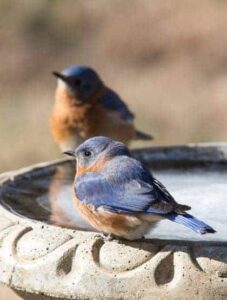 like overturned trash can lids or large saucers with water for them.
 - Keep hummingbird feeders cleaned out and filled. Sugar water left out in the heat for a number of days can breed bacteria that is harmful to the beautiful birds visiting your feeders, so be sure to clean them out every few days.
Happy Gardening!
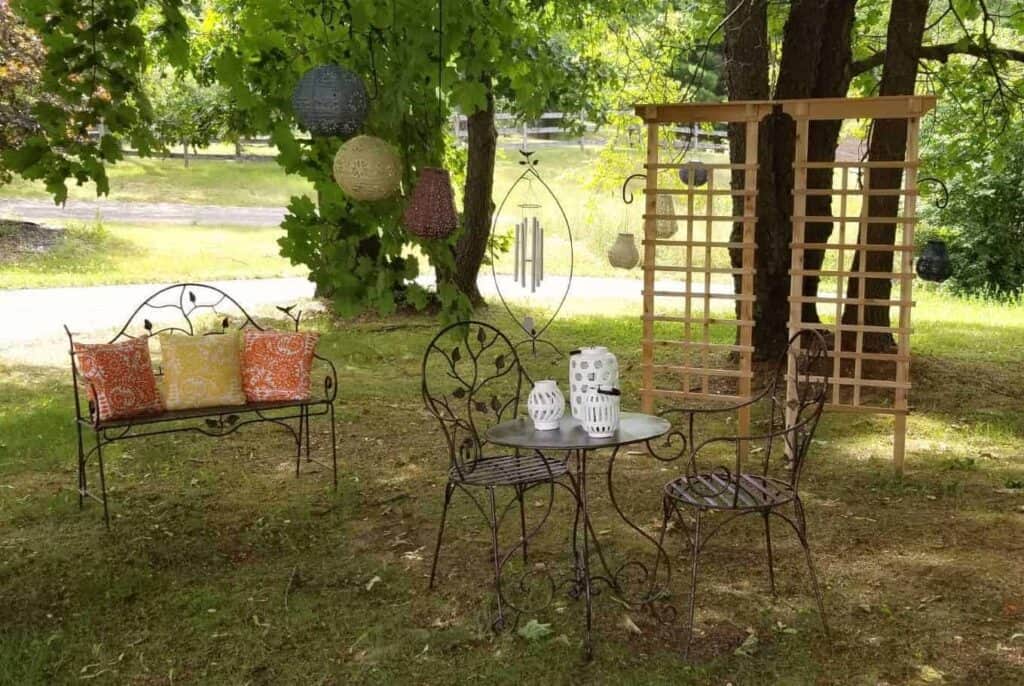
Create An Oasis in Your Own Backyard!
Let us take you one step closer to enjoying a perfect summer escape without having to leave home. Stop by and get inspired by our lovely outdoor furniture, lawn decor, and large metal sculpture treasures and create your very own personal haven!

If you haven’t discovered the shopping page of our website yet, you can find it here.
We have a number of our products available for purchase there, and are adding more every day. If you don’t see something you are looking for there, give us a call, or make an appointment to come in and shop.
We’re here to help you find just what you’re looking for in whatever way works best for you, including offering curbside pickup.