
Well, you have to hand it to Michigan weather – if nothing else, it is definitely interesting! The late-summer-like temperatures we had leading up to the holiday weekend made it seem like we were past all the chilly stuff. And then came the holiday itself. You know – the official kickoff to summer? The time when everyone gets together for cookouts and fun in the sun? I thought I was going to get some gardening done on Monday. I didn’t. Couldn’t quite bring myself to see it as gardening weather. So now, I’m even farther behind than usual in getting my vegetable garden going. Guess I’ll have to kick it into high gear this weekend. At least the overnight temperatures look to be better than the last couple of days in May! Maybe it’s not so bad that I’m behind.
One thing I did get to enjoy over the holiday weekend was the Peony Garden at the University of Michigan’s Nichols Arboretum. If you haven’t made it out yet, do hurry – the peonies are usually in bloom from late May through early June, so there should still be a little more time to see them. It’s so worth the trip and the parking hassle (though I wish they would consider opening up more parking for the weekends that the blooms are in)!
Jennifer
This month’s issue of Let’s Get Gardening
Subscribe to our monthly newsletter for seasonal gardening advice and recommendations for your garden, yard, and bird feeding.
If, like me, you haven’t quite caught up on your gardening chores, don’t despair – there’s still time. But don’t wait too much longer, as many of our favorite veggies need a long growing period to produce. There are also plenty of other things to do this month.
In the veggie garden:
- Plant tomato, pepper, eggplant, cucumber, and squash seedlings now in order to be sure that you’ll get a good harvest later this summer. If you’re planting tomatoes, look for some with different harvest times – early-, mid-, and late-season – to be sure to have some coming in throughout the season. Also keep in mind what you plan to do with those tomatoes. If you’re going to do any canning or freezing, it’s a good idea to plant some determinate tomatoes. Determinate tomatoes are ones that generally produce all their fruit in a short period of time, which is great because it allows you to harvest them all pretty much at once and get your canning of freezing done in one or two sessions. Determinate tomatoes are also generally shorter and bushier than indeterminate ones, making them good for container and other small-space gardening. Indeterminate tomatoes generally get taller and produce a few fruits at a time, making them great for eating on sandwiches and in salads all throughout the summer.
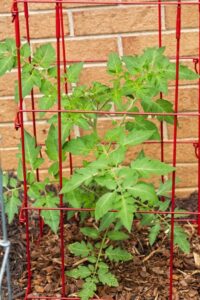 Be sure to put stakes or cages in when you plant your tomatoes (and anything else that needs support) so that you don’t damage roots later. Supporting tomatoes helps to prevent disease by allowing more airflow around the plants. Mulch around your plants as soon as you have planted them to keep the soil temperature consistent, suppress weeds, help retain moisture, and help prevent soil-borne diseases from spreading to your plants.
- Also, when planting seedlings, be sure to add some starter fertilizer to the planting hole just before putting the plant in. These products generally contain mycorrhizae, a beneficial fungus that helps roots take up the nutrients in soil more efficiently, helps to stimulate growth, and accelerate root growth, giving the plant a better foundation for all the production you are hoping for. About halfway through the growing season, add some more fertilizer to the soil around your plants.
- I know I said this last month, but it is worth repeating – spray tomatoes, cucumbers, and squash with an organic fungicide early and often to prevent diseases. Begin as soon as you get the plants in the ground and follow the manufacturer’s instructions for frequency (usually weekly, but possibly more often if we are getting a lot of rain).
- Planting seeds of carrots, bush beans, dill, and cilantro every week or two will ensure that you’ll have a continuous harvest throughout the season. Be sure to read the package information about how long each variety you are planting needs to mature. Figuring that our first frost usually hits around October 15, you can determine how late you can plant things and still hope to get a good harvest. Once you have planted seeds, be sure to keep the soil around them moist. Seeds won’t generally germinate in dry soil. You can apply a thin layer of mulch to help keep moisture in the soil but be careful not to put so much mulch over the seeds that the new plant shoots struggle to get through.
- Weed early and often! Weeds compete with your plants for water and nutrients, and they can also be disease carriers. Pulling weeds when they are small is much easier than when they have gotten their roots well established. It’s especially important to pull weeds before they go to seed, so that they aren’t starting a new generation of weeds in your garden.
- Keeping on top of pests in your gardens is as important as keeping on top of diseases and weeds. Letting aphids, flea beetles, cucumber beetles, Colorado potato beetles, cabbage moths, slugs, etc. get out of control can mean you end up with reduced harvests. While most healthy, mature plants can withstand some insect pressure, young, tender, new plants can be decimated in no time. Be sure to take the time to know what pests you are dealing with before you reach for insecticide, as the right solution depends on the pest. Not all insecticides will control all insects. Also be careful when and how you are applying pesticides.
- Lastly, don’t forget to keep your plants watered. An inch of water per week is the general recommendation, but that may need to be adjusted, depending on the weather. Obviously, if Mother Nature is providing the water, you probably don’t need to. On the other hand, if it’s really hot and dry, you may need to give your plants a little extra water to keep them from wilting in the heat. In that case, the best time to water is actually in the afternoon, to help to cool the soil.
In the Flower Garden:
- Plant summer-blooming bulbs if you haven’t already. This includes dahlias, gladiolus, lilies, begonias, and canna lilies.
- Wait to trim back the foliage of your spring blooming bulbs, such as daffodils, tulips, and alliums, until the foliage has died completely. Although it’s tempting to trim them sooner to tidy up the garden, leaving the foliage will help the bulb use the sun’s energy to feed itself for next year’s blooms.
- Planting annuals that have been started for you by a grower is a quick way to get a bedful of flowers, but you can also still direct-sow lots of annual flower seeds and expect to get blooms this year. Some to consider include cosmos, four o’clocks, marigolds, nasturtiums, sunflowers, and zinnias.
- Fertilize annual flowers regularly throughout the season. Producing flowers takes a lot of energy, which uses up a lot of nutrients, so giving them a regular boost will mean more flowers for you to enjoy. Perennials generally only need one application of fertilizer each spring, as they are starting to put out new growth. For both types, a low-nitrogen, high-phosphorus fertilizer is best. Too much nitrogen can produce lots of foliage, but not a lot of flowers, and can cause some plants to get leggy and flop over.
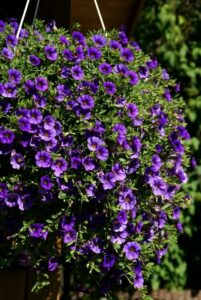
- The secret to keeping your container plantings blooming all summer long is to keep them well-fertilized and watered. As containers fill up with roots, they don’t hold water very well, so you need to be sure to keep them watered. And, since the plants are in a container, they can’t get their nutrients from the soil around them, unless you provide it. Just be careful not to over-water or over-fertilize, especially with chemical fertilizers. Too much of a chemical fertilizer can “burn” your plants – a sure way to kill them – and too much water will drown them. If your containers are in a sunny spot, check them at least once per day, and water as needed.
Trees & Shrubs:
- Prune back early-blooming shrubs – those that finish blooming before the end of May – after they have finished blooming. This will encourage new growth and more flowers next spring. Be sure to sharpen your pruners before getting to work. Dull pruners can cause a great deal of damage, and clean cuts heal faster.
- Don’t “seal” pruning wounds when you prune trees. The old way of thinking was that you needed to, in order to keep diseases from setting in. New information has shown that it isn’t effective and is more likely to cause problems by keeping the area moist. These days, the only time sealing is recommended is if you prune an oak tree any time other than in the dead of winter. The reason for this is that the flowing sap of a freshly cut oak can attract insects that carry oak wilt disease, which is deadly to the tree.
- You can pinch back evergreens once they have put out new growth, if you want to control their growth or shape. Pinching the new “candles” back by half will encourage them to bush out. But don’t cut into old wood, as most evergreens won’t produce new shoots from old growth.
- Be sure your trees and shrubs have a good layer of mulch over their roots to keep them evenly moist, and to prevent weeds. Mulch should extend out to the tree’s dripline (the circumference of the tree’s canopy), but not be placed right up against the trunk, which can lead to disease.
- Water trees and shrubs if we aren’t getting sufficient rain. Newly planted trees and shrubs should be carefully watered for the same reason newly planted flowers need to be – they aren’t as good at taking up water while the roots are getting established. But be careful about how you water any tree or shrub. Water infrequently, but deeply. You want to encourage the roots to grow deeply, which won’t happen with frequent, shallow watering.
Birds:
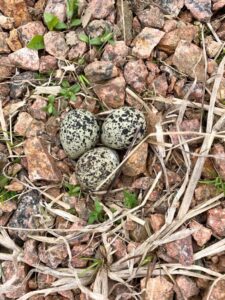 When you are out in your yard, keep an eye out for things like killdeer nests (killdeer build their nests on the ground), and be careful to keep activity away from them as much as possible. Also watch out for baby birds that have left the nest but have not yet mastered flight. They probably don’t need your help, unless they are somewhere where they might be in danger, like in the road, but do watch for them as you go about your yard to be sure that you aren’t putting them in danger with things like power equipment.
- If you had birds nesting in your bird houses, cleaning the houses out after the babies have fledged can encourage birds to re-use them for a second brood.
- The Baltimore orioles and hummingbirds have been visiting my nectar feeders regularly, and they are so much fun to watch. Clean out and refill hummingbird and oriole feeders regularly. Sugar-water left out in the hot sun can quickly spoil, and become bacteria-filled. If it’s really hot, empty, clean, and refill the feeders every two to three days. When it’s not as hot, be sure to clean them out at least weekly. Be sure to only use regular, white table sugar when mixing your own nectar, in a 1 part sugar to 4 parts water ratio. Don’t use any other sweeteners.
- Remember to clean out and fill your bird baths regularly. Bird baths provide your birds with a place to get a drink or a good bath, and they provide you with lots of entertainment, as you watch the birds playing in the water. Clean water is even more important for the birds as the temperatures climb, so be sure to empty, clean, and refill baths each day.
Read More
More info on all of these tips can be found in our monthly newsletter: Read the full June 2024 issue of Let’s Get Gardening
Happy Gardening!
Join us on Thursday Nights, starting June 6th, for
Sounds & Sights on Thursday Nights.
We’re open late – until 8pm!

$10 off any $50 purchase

Expires 6/30/24
Cannot be combined with any other offer.
Not valid on artist consignment items.
Cannot be used to purchase gift certificates.