
Let’s Get Gardening!
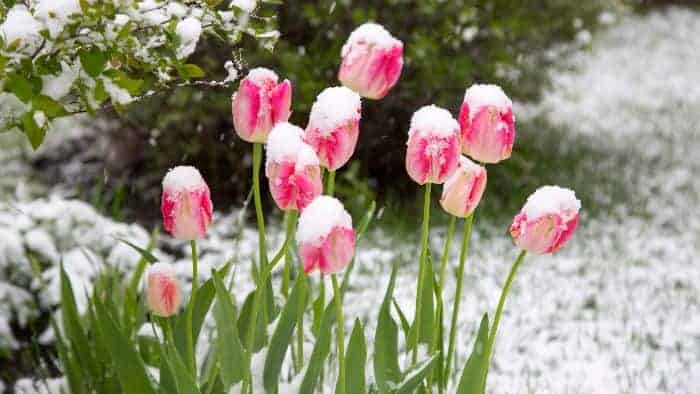
Will somebody please tell Mother Nature that we’ve had enough of this crazy weather? Does she not know that we have things to do in our gardens?!
Jennifer
This month’s issue of Let’s Get Gardening
Subscribe to our monthly newsletter for seasonal gardening advice and recommendations for your garden, yard, and bird feeding.
The weather will straighten itself out eventually, and once it does, we are going to be so ready to get out and get things done. That’s a good thing, because there is so much to do in our yards and gardens in May!
Flowers, Trees & Shrubs:
- As the soil warms up, it’s time to put down new mulch in your flower beds and around your trees and shrubs. Use a garden fork to fluff old mulch to keep it from compacting – compacted mulch won’t allow water to reach the plant roots – then add new mulch, but not too much. Yes, there is such a thing as too much mulch – like compacted mulch, it keeps the water and
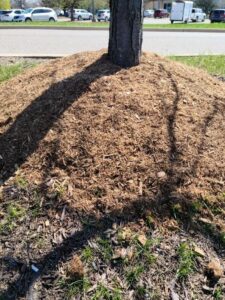 air from reaching plant roots. The total depth of mulch needed depends on the type of mulch you are using. If you are using a fine-textured mulch, such as shredded wood or bark, then 2 to 3 inches is the maximum depth to put on your plants. For coarser wood products such as pine bark nuggets, you can go as deep as 4 inches, but mulches of shredded leaves and grass clippings should be no more than 2 inches deep, as these tend to mat down. Whatever you do, please do not form a “mulch volcano” around your trees.
 - Divide summer-blooming perennials that are getting too big for their space or look like they are dying out in the middle early this month so they have time to get roots down before the summer heat really sets in. If you don’t have room for all the “new” plants, consider trading with a friend for something they have that you want, or give them away to a new homeowner looking to start their own flower beds.
- Most annual flowers should be planted out after all danger of frost has passed. If you plant annuals in containers before about mid-month, just be sure that they can be moved into a garage or covered up if frost is in the forecast.
- Prune spring-flowering shrubs once they have finished flowering. If you prune things like lilacs now, you won’t get any blooms (or you will get far fewer) this year. Pruning forsythia on an annual basis, after bloom time, helps keep them looking good year-after-year. Take off up to one-third of the growth each year to encourage more bushy growth, rather than long, tall branches with few leaves and flowers that occur when these plants aren’t regularly pruned.
- Plant new trees and shrubs early in the month, and be sure to water them regularly throughout the spring and summer. The University of Minnesota Extension Service offers great advice on how to properly water newly planted trees to give them the best chance of thriving.
Lawn:
- Should you fertilize your lawn in the spring? The answer to that depends on your soil conditions, and the only way to know that is to have it tested. Without knowing what your soil needs, you could be wasting your money on the wrong fertilizer, or you may not need fertilizer at all.
- If you haven’t started mowing yet, you probably will need to soon. Before the first mow, walk through your yard and pick up branches that may have been blown down, rocks that may have been plowed from your driveway, and other debris that may cause damage to your mower.
- When you do mow, consider mowing higher than you might usually. MSU extension recommends mowing no lower than 3.5” to maintain a healthy lawn. That may sound high, but there are lots of really good reasons for it. Their Mow High for Weed and Grub Control publication explains how mowing higher can help shade out weeds, retain moisture, and promote healthy root systems in your lawn, which can help with grub control.
In the veggie garden:
- It’s been tough to get going in the vegetable garden this year because of the cold and wet, but don’t worry – it’s not too late to plant potatoes, onion sets, broccoli, cabbage, kale, head lettuce, rhubarb, asparagus, and strawberries. But get all of
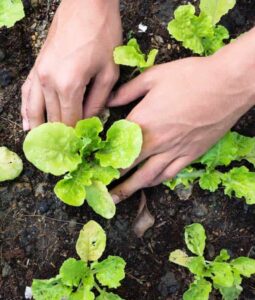 these in the ground soon, as the first two need a good long growing season, and the rest prefer cooler temperatures. You likely won’t be harvesting the rhubarb, asparagus, and strawberries this year, though – in general, they will need a full year to get established before harvesting. Because of this, make sure you have a spot for them where they can grow undisturbed for a number of years. All three like well-drained soil, and really need to be in an area that is kept weed-free in order to thrive. But the work is well worth it!
 - Some herbs can be planted now, such as parsley, thyme, sage, and oregano. Others, such as rosemary, basil, cilantro, and dill should wait until all danger of frost has passed.
- Seeds to plant now include leaf lettuce, spinach, carrots, radishes, and beets. Beans can be planted beginning about mid-month or a little earlier, if the soil has warmed up.
- Once the soil has warmed up to above 60° and nighttime temperatures are consistently above 50°, it’s safe to plant tomatoes, peppers, eggplant, squash, and cucumbers. Around here, that typically means about the time of Memorial Day weekend. Not sure what your soil temperature is? Soil Thermometers are simple to use and take the guesswork out of knowing when it’s time to plant.
For the birds:
- If you have been feeding birds all winter and are thinking of stopping for the summer, don’t do it yet. As migrating birds are
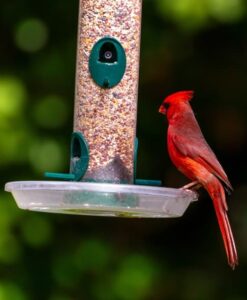 making their way to their northern breeding grounds, they are using up a lot of energy and can benefit from a little extra easily-gotten protein from your feeders.
 - The other benefit to feeding the birds throughout the spring is that it gives new bird parents another option in addition to insects and worms while feeding freshly hatched baby birds.
- If you haven’t gotten your hummingbird and oriole feeders out yet – don’t wait any longer! Hummers and orioles have been spotted in the area already, and they’re likely hungry from their long trip north.
- It’s also time to get out bird baths now. Keep your bird baths cleaned and filled – emptying them out, giving them a good scrubbing, and refilling them daily ensures that the birds have a fresh source of water while also ensuring that mosquitoes can’t use that source of water for breeding.
Read More
More info on all of these tips can be found in our monthly newsletter: Read the full May 2023 issue of Let’s Get Gardening
Happy Gardening!
Mother’s Day will be here before you know it!
Come into The Garden Mill or shop our Online Store to find the perfect Mother’s Day gift. We have lots of great ideas for every mom and every budget. We get beautiful flower baskets and pots weekly at this time of year, so you’re sure to find the one she would love to have hanging on her front porch or gracing her patio.
We also have a great selection of gardening tools, gloves, plants, and seeds for all the gardening moms, as well as decor for your mom’s yard and home. For moms who love birds, we carry lots of feeders, houses, and bird baths. And of course, a gift certificate can never go wrong.
You’re sure to make Mother’s Day even more special with a gift from The Garden Mill!
This May Is the 10th Annual Planter & Pottery Sale!
Get Up To 50% Off!
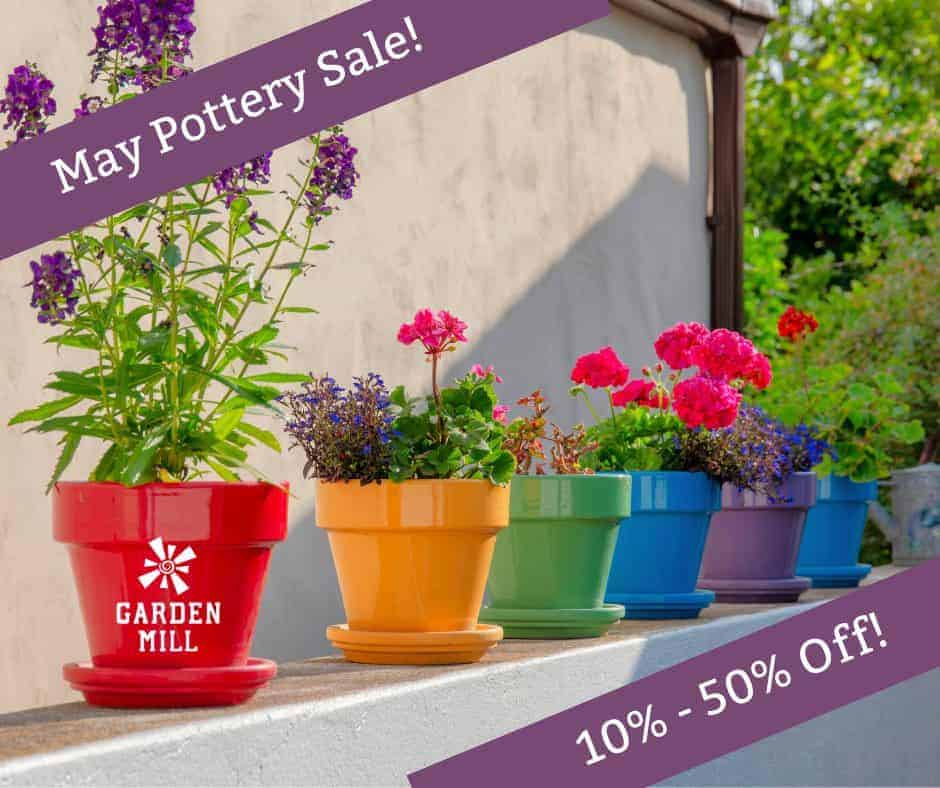
In Store Only. While Supplies Last.
Cannot be combined with any other offers.
$10 off any $50 purchase

Cannot be combined with any other offer.
Not valid on artist consignment items.
Cannot be used to purchase gift certificates.