
Let’s Get Gardening!
Did somebody forget to tell Mother Nature that it’s October?! The temperatures seem more like August right now, and I hear that the predictions for this winter are for it to be milder and drier than normal. I do worry when our winters are “mild” that the insects and diseases that would normally be killed off over the winter might live to plague us next spring and summer, but it’s also hard not to be a little happy that we might not see lots of snow. Hmmmm, what to wish for? It’s hard to decide…
Jennifer
This month’s issue of Let’s Get Gardening
Subscribe to our monthly newsletter for seasonal gardening advice and recommendations for your garden, yard, and bird feeding.
It’s definitely hard not to be happy about the weather right now, especially when there is so much still to do in our yards and gardens before it actually does get cold. We all know that, no matter how “mild” the winter is, it will still be cold around here sooner or later. Before it does get too cold to want to be outdoors, there are a number of things still to do:
Vegetable Garden:
- Warm-weather-loving vegetables are probably done or winding down about now. I still have zucchini, sweet and hot peppers, and beans producing a little bit in my garden, but my tomatoes and cucumbers have long since succumbed to disease that I just couldn’t keep up with this year, though that didn’t seem to stop the tomatoes from producing like crazy.
- Some crops, such as kale, cabbage, and broccoli can take a bit of frost, so if you have any of those still, I wouldn’t be in too much of a hurry to pull them.
- Pulling out the warm-weather plants leaves room to plant garlic later this month or early next month. Like our spring-blooming flower bulbs (such as tulips, daffodils, and alliums), garlic is a bulb that gets planted
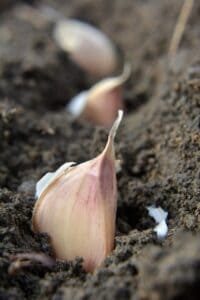 in the fall and comes up in the spring. When you plant it, break apart the bulb and plant the individual cloves – each clove becomes a garlic bulb, so you get a great return on your investment.
 - Once your veggie garden is done for the season, clean it up while there are still some warm days that make you want to be working outdoors. Waiting until it’s really cold will pretty much ensure that it won’t get done until spring and doing it in the fall means you can get planting as soon as the soil warms up in the spring.
- If, like me, you had disease issues in your garden this year, be sure to dispose of the diseased plants properly to help reduce the chances of disease taking out your plants next season. Remove all parts of the plants, including as much of the roots as you can get, and put it all in the trash. Do not compost diseased plant material, as composting does not kill off many diseases, and you could be just re-introducing the problem back into your garden next spring. Next year, treat the soil with a systemic fungicide, prior to planting, to help prevent the disease from taking hold again.
Flower Beds:
- Late October and even into November is the time to plant bulbs for spring-blooming flowers. Get your
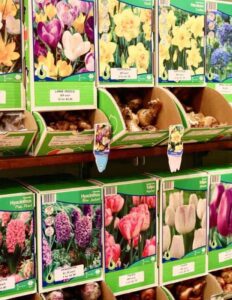 bulbs in before the ground freezes, and you will be rewarded with beautiful flowers early in the spring, when not much else is daring to peak up out of the ground. Our bulbs have started to arrive at the store, with more coming in the next couple of weeks. Come in for a selection of tulips, daffodils, allium, crocus, hyacinth, and muscari.
 - If you haven’t already, it’s time to dig up your dahlia, canna, caladium, and gladiolus bulbs. These tender perennials can’t survive our winters, so they need to be dug up and stored in a cool, dry place.
- There is still time to divide and transplant perennials, but do it soon so that your plants have time to get acclimated in their new space before we start getting killing frosts and before the ground freezes. After planting them, give them a good layer of mulch and keep them well watered until the ground freezes.
- Make sure your plants go into winter with a good layer of mulch over their roots. With the prediction for a milder winter, we are likely to get freeze-thaw cycles throughout the winter, which can cause heaving, leading to damage to the crown and roots, or even to the death of the plant.
- It used to be that everyone thought you should tidy up your perennial garden in the fall – cut back perennial flowers and grasses, rake up and burn or otherwise dispose of leaves, and generally get your garden all cleaned up and set for spring planting before winter set in. Over time, we have come to understand that those activities were not always the best thing to do for the health of our gardens or the birds and beneficial insects that call our gardens home.
Trees and shrubs:
- There is still time to get new tree or shrub planting done, too – but get them in soon. Make sure to water them well all the way up until the ground freezes, so that they have the best chance of making it through the winter.
Lawn:
- Grass will continue to grow until we get a killing frost, so keep mowing. If you leave the grass too long over the winter, it is more susceptible to disease. Mulch the clippings into the lawn to help add nutrients back into the ground, which in turn will help feed the lawn.
- Too many leaves left on your grass over the winter can cause problems for your lawn next spring, so rake them into your flower beds to provide mulch for the plants and winter habitat for beneficial insects.
Tools:
- Keep hoses handy this month, in case we don’t get a lot of rain. Keep watering your perennials, trees, and shrubs up until the ground freezes, as a lack of water causes stress to the plants, making it harder for them to make it through the winter. This is especially true of anything newly planted. Do be careful that
 you aren’t leaving hoses outside with water in them when we start getting freezing temps though, as this can cause them to split open when the water freezes.
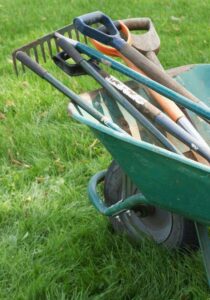
 - After you’ve cleaned out your gardens and finished your mowing and watering, don’t forget to clean your tools before putting them away for the winter. Doing so will help them last longer, and make them work better for you.
Birds:
- Cleaning out bird feeders and keeping them filled will help migrating birds make it to their winter homes, and also provide those sticking around with options to help them through the cold months.
- Keep your hummingbird feeders full and out for a little longer yet (bring them in at night if we are expecting freezing temperatures). Hummers are still making their way south and could use the boost of energy.
- Also keep birdbaths clean and full to help provide a source of water for the birds.
Read More
More info on all of these tips can be found in our monthly newsletter: Read the full October 2023 issue of Let’s Get Gardening
Happy Gardening!
Join Us As We Kick Off The
Holiday Shopping Season With
The 18th Annual Wine, Women & Shopping –
Friday And Saturday, November 10th & 11th!

We’ll be open late with specials on great gifts
and holiday décor both days!
$10 off any $50 purchase

Cannot be combined with any other offer.
Not valid on artist consignment items.
Cannot be used to purchase gift certificates.