
Let’s Get Gardening!
I don’t know about you, but I could use a little more sunshine than we’ve gotten lately! April was a bit too gloomy for my taste, and didn’t really give me much opportunity to get out into my yard and gardens. Here’s hoping May makes up for that!
Jennifer
In this month’s issue of Let’s Get Gardening
Subscribe to our monthly newsletter for seasonal gardening advice and recommendations for your garden, yard, and bird feeding.
In this month’s issue:
May is an interesting month in the world of gardening. It usually starts out somewhat chilly, and is often quite warm by the end of the month. In between, it can go back and forth many times, making it hard to decide what you should be doing in your garden. I hope some of this helps you figure it out.
Vegetables and herbs:
- If you haven’t gotten anything planted in your vegetable garden yet, you’re in good company! The weather has been less than hospitable to gardening so far this spring, and the soil really hasn’t warmed up enough to allow for much of anything to grow. You should start to think about getting some things planted now though, including potatoes, onions sets or seedlings, kale seedlings, cabbage seedlings, broccoli seedlings, and head lettuce seedlings.
- If you’ve never grown your own potatoes, there are a number of reasons you should consider doing so, but the
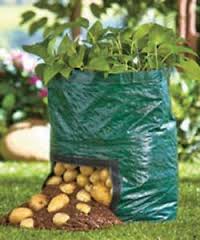 biggest reason I can think of is that commercially grown potatoes tend to be grown using lots of pesticides.
 - Some herb seedlings can be planted out while temps are still a little low, including parsley, thyme, sage, and oregano. Others, such as rosemary, basil, cilantro, and dill should wait until all danger of frost has passed. Basil doesn’t tolerate temperatures below 50°, so definitely wait to put that out in your garden until about Memorial Day weekend.
- Seeds to plant outdoors early this month include leaf lettuce, spinach, carrots, radishes, and beets. Beans can be planted beginning about mid-month, if the soil has warmed up.
- If you are starting your own plants, it’s time to start squash and cucumber seeds indoors, so that they are ready to transplant outside around the end of the month.
- Once the soil has warmed up to above 60° and nighttime temperatures are consistently above 50°, it’s safe to plant tomatoes, peppers, eggplant, squash, and cucumbers. Around here, that typically means about the time of Memorial Day weekend.
Flowers:
- Now is a great time to get a jump on weeds, before they get out of control. Pulling weeds is a lot easier when the soil is moist, so getting out into the garden after it’s rained is a good thing, as long as you are careful not to compress the soil around your plants.
- Most perennials can be planted this month, and sooner is even a little better than later, as you want them to have a chance to get well-rooted before the hot dry weather of summer sets in. This month is also a good time to divide late spring- and summer-blooming plants.
- For annuals, it’s still a little too early to plant much of anything right now, but by about mid-month it should
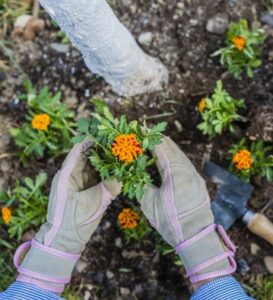 be OK, depending on the temperatures. Remember, all the annuals available now have been living in heated green houses. Putting them in the ground right now would only shock them, and slow their growth.
 - Patio pots and hanging baskets can be put out as we warm up a little during the day now, but you will want to bring them inside at night (an attached garage is fine), if the temps are dipping below about 40°. Look for our lovely, locally-grown hanging baskets and patio pots later this week!Trees and Shrubs:
- May is a good time to plant new trees and shrubs. The Arbor Day Foundation has lots of great tips for choosing the right tree for your needs, along with details for proper planting and care.
- Once your early-blooming shrubs, such as forsythia and flowering quince, have dropped their blossoms, you can prune them back for better growth in the future. Letting them go without regular pruning will cause them to have leaves and flowers on the ends of long, mostly leafless branches.
- Whether you are planting new trees and shrubs or sprucing up existing ones, once the soil has warmed up, it’s
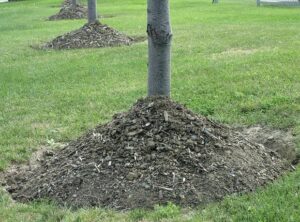 time to mulch. Don’t mulch too soon, as that will keep the soil cooler, which can slow down growth. When you are mulching trees, avoid creating mulch “volcanoes” (piling mulch up around the trunk), which can slowly kill your trees.
Birds:
-
-
-
- It’s time to get out the Hummingbird and Oriole feeders. I saw a gorgeous Orchard Oriole at my house just
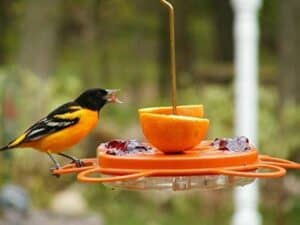 last week, and I want to encourage him to come back! Please remember to clean out your feeders regularly – at least once a week while the temps are cooler, but more frequently when it’s warmer out.
 - There is a great deal of concern, and some conflicting information, about the avian flu that is being found in domestic chicken and duck flocks around the state (and the country) currently. I can’t pretend to have all the answers to those concerns, but will share what I have learned, both from the Michigan DNR and the Cornell Lab of Ornithology, on the subject.
- First – songbirds do not appear to be affected by the disease, but they can carry it and potentially transmit it.
- Second – the disease is more likely to affect poultry and waterfowl than other birds, though raptors (eagles, hawks, falcons, and owls, among others) seem to be more sensitive to the disease.
- Third – there is not a mandate in Michigan to remove wild bird feeders. There are suggestions about removing them or moving them if you keep domestic poultry or waterfowl, but whether or not you put out feeders now is entirely up to you.
- Fourth – there is absolutely strong recommendation to keep your feeders, and the area around them, clean! This is important at all times, but especially now, to help reduce the possibility of disease transmission.
- You can learn more about the disease, and keep up with the latest information at the websites of the DNR and the Cornell Lab.
- Bottom line – it’s up to you what you do about your feeders, but if you do keep them out, please be conscientious about keeping them clean. Basically, the experts are saying that it can’t hurt to take them down, and may help, but they don’t know for sure.
- Same things go for bird baths. If you are going to put out bird baths, keep them super clean. For baths, that really means emptying them out and giving them a good scrubbing pretty much daily, with a more thorough cleaning with a 1-part bleach to 9-parts water solution every week. Be sure to rinse them thoroughly before filling them back up.
- It’s time to get out the Hummingbird and Oriole feeders. I saw a gorgeous Orchard Oriole at my house just
-
-
More info on all of these tips can be found in our monthly newsletter: Read the May 2022 issue of Let’s Get Gardening
Happy Gardening!
9th Annual Pottery Sale Going on Now!
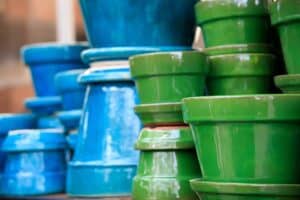
Get 10% to 50% Off
In Store Only
While Supplies Last
May 1st through May 31st
Cannot be combined with any other offers.
Store News & Specials
$10 off $50 purchase coupon