
Let’s Get Gardening!
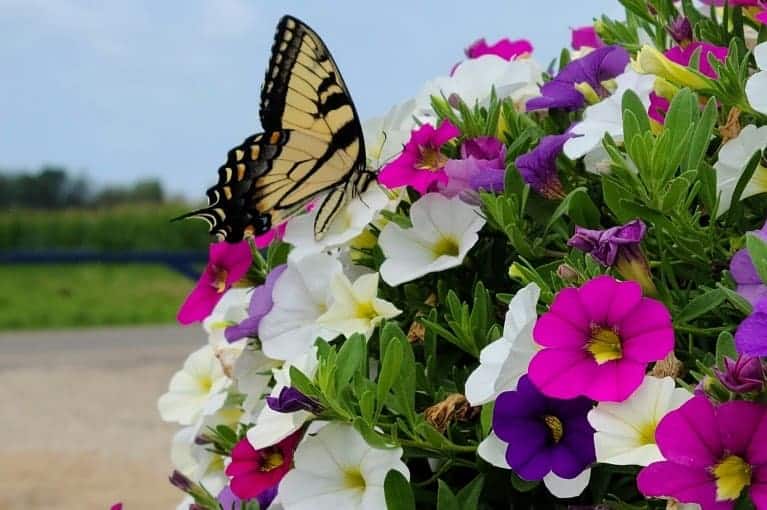
I got to spend a few hours wandering around among some beautiful flowers last week – it’s one of the perks of the job! Every year (well, except last year, because it was last year), I try to visit one of the nurseries on the annual Michigan Garden Plant Tour. It’s a great way to see what the growers will have available for the following season, including new introductions of varieties and colors in bedding plants as well as container and hanging basket mixes. I’m excited about some of what will be coming out for next year! Check out our Facebook page to see some of the pictures I took (including the one above of the gorgeous Eastern Tiger Swallowtail butterfly that was really enjoying this beautiful hanging basket combination of calibrachoa!).
Jennifer
In this month’s issue of Let’s Get Gardening
Subscribe to our monthly newsletter for seasonal gardening advice and recommendations for your garden, yard, and bird feeding.
In this month’s issue:
The weather in July certainly made gardening challenging. I don’t know what I liked the least – the heat, the humidity, the rain, or the mosquitoes! I’m glad things seem to be settling down a bit, at least for a little while, anyway. It makes it easier to get things done in my gardens – and there’s lots to do.
In the vegetable garden:
Last month, I gave lots of information about insect pests in the garden, so I thought I’d continue that theme this month, but with diseases, since there are lots of them out there right now.
-
-
- With all the rain we’ve been getting, plus all the humidity when it’s not raining, diseases are really causing lots of issues in vegetable gardens right now. Below are some of the more common problems people seem to be facing, along with information on what to do about them. Keep in mind – it’s a lot easier to prevent diseases than to cure them once they have gotten going, so regular applications of fungicide are important.
- Blossom End Rot is a very common problem for tomatoes, squash, eggplant, melons, and peppers when we are getting as much rain as we have seen this summer. It also happens when plants aren’t getting enough water. As I mentioned last month, the problem is a lack of calcium that is generally because the plants aren’t able to take up the calcium in the soil, not necessarily because of a calcium deficiency in the soil itself. It’s best to check your soil for calcium levels before you do
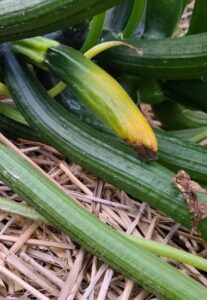 anything to add calcium. Adding calcium to soil that already has sufficient levels won’t help your plants. You can get a soil test that will help you determine the levels of lots of different minerals (including calcium) from MSU Extension Service. Fungicides and pesticides will do nothing to solve blossom end rot. If your soil has sufficient calcium, then ensuring consistent moisture levels in your soil is the best way to prevent this problem. That can be tricky when we’re getting torrential downpours like the one we saw last weekend, and really only well-drained soil can help in that situation. One other thing to mention on this topic: something that looks like blossom end rot can be caused by a lack of pollination, especially in cucurbits. I suspect that is the cause of the problem I’ve been having with my zucchini this year (pictured at left).
 - Bacterial Speck on Tomatoes shows up as small black spots on leaves (⅛ to ¼ inch n diameter) that are usually more prominent on the undersides of leaves. As the spots age, a yellow halo often develops around the edge. Symptoms can also appear on the fruit as small, black spots. Copper-based treatments can help to slow the problem down, but there is no cure.
- Bacterial Spot on Tomatoes can show on any part of the plant (leaves, stems, fruit), and can lead to plant death. It is very difficult to tell the difference between bacterial speck and bacterial spot, but if left in the garden, bacterial spot can infect all tomato plants, and ruin your entire crop. Prevention is key – avoid overhead watering, use preventive sprays from the time you plant, don’t work with your plants when their leaves are wet, and always clean your tools with a 10% bleach solution or rubbing alcohol after every cut.
- Early Blight can affect tomatoes, potatoes, eggplant, and peppers. Early blight generally first appears on the stem and leaves near the base of plants, as somewhat circular brown spots. As these spots enlarge, concentric rings appear, giving the areas a target-like appearance, often with a yellow halo. Eventually multiple spots on a single leaf will merge, causing the entire leaf to die. Early blight can lead to a total loss of lower leaves and even the death of an infected plant.
- Late Blight is a very destructive disease that mostly affects tomatoes and potatoes, but can also sometimes infect peppers and eggplant. Late blight begins as pale-green or olive-green areas that quickly enlarge to become brown-black, water-soaked, and oily-looking. Dark-brown to black areas can also appear on stems. Affected parts of the plant develop a white-gray fuzzy appearance as the disease grows. This disease thrives in cool, wet conditions, and can kill a plant in a matter of days from the first appearance of symptoms. If late blight infects your plants, pull them immediately (removing all roots as well). Place all of the debris in a tightly closed plastic trash bag, set the bag in the sun for a few days to help kill the disease, and then dispose of it in the trash.
- Powdery Mildew is a disease that occurs on the leaves, branches, vines, and stems of many plants in the vegetable garden, including cucumbers, squash, beans, beets, eggplant, melons, carrots, lettuce, peas, pumpkins – you get the idea: pretty much everything. Here’s an interesting thing though – every plant species has its own type of powdery mildew fungus, so the fungus that affects cucumbers is not the same one that affects lettuce, etc. Regardless of what plant is affected, symptoms typically start with a white, powdery-looking coating on the leaves of the plant (though tomatoes, peppers, and onions usually only show yellow patches). This disease thrives in hot, somewhat humid conditions, especially where air circulation is poor, and in shady spots of the garden. Not to sound a like a broken record, but again, prevention is best.
- Downy Mildew, like powdery mildew, is a soil-borne disease that can affect many plants, but each plant family is only infected by a it’s own type of the disease. The plants most often affected in home gardens tend to be those in the cucurbit family (cucumbers, melons, squash, pumpkins, watermelon, and gourds). Basil, grapes, hops, soybeans, and spinach are also susceptible to downy mildew. In cucurbits, it appears as green to yellow spots on the tops of leaves that later turn brown. The undersides of the leaves may show a gray fuzz. Unfortunately, once this disease sets in, there is nothing you can do to stop it, and you should immediately pull the plants and dispose of them.
- Cucumber Mosaic Disease is a virus that actually affects hundreds of different plants, including flowers, herbs, shrubs, and weeds. Symptoms, which vary by plant and plant development stage, can include stunting of entire plants, mosaic or mottling (blotchy light-and-dark-green or yellow-and-green areas) and ring spots (ring-like areas of discolored tissue) on leaves and fruits, along with a variety of growth distortions on leaves, such as cupping (or curling inward), puckering, and strapping (elongation and thinning). Severe infection can kill plants.
- Bean Common Mosaic Virus and Bean Common Mosaic Necrosis Virus are diseases that affect snap and dry beans. The viruses are often already in the bean seeds, so planting resistant varieties is important. Aphids can also transmit the disease. Plants grown from infected seed are almost always stunted and unproductive. Yields are generally not as affected in plants infected by aphids later in the growing season.
- As with insect pests, there are many different diseases that could be affecting your plants – far more than I can cover here. I have tried to outline some of the most common ones we tend to see in Michigan gardens, but if you think your plants have a disease, and you can’t determine what it is, you can submit digital pictures to the MSU Extension Service’s Plant Diagnostic Lab for diagnosis, or mail or drop off samples of your plants for diagnosis. I can try to help with identification of disease, but it is not my area of expertise, and many diseases have similar symptoms, so I highly recommend turning to the experts on this.
- Blossom End Rot is a very common problem for tomatoes, squash, eggplant, melons, and peppers when we are getting as much rain as we have seen this summer. It also happens when plants aren’t getting enough water. As I mentioned last month, the problem is a lack of calcium that is generally because the plants aren’t able to take up the calcium in the soil, not necessarily because of a calcium deficiency in the soil itself. It’s best to check your soil for calcium levels before you do
- Be sure to harvest cucumbers, beans, and zucchini regularly (I’m picking beans daily right now!). Many
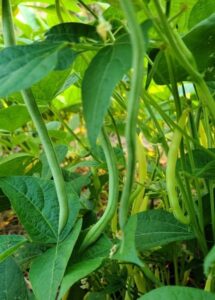 plants will stop producing if you don’t keep harvesting. The reason for this is that they start to concentrate on maturing the fruits they have, in order to produce seeds. By constantly harvesting, you are basically tricking the plant into producing more fruit so that it can produce and mature seeds (that being the whole goal of the plant).
 - If you haven’t yet harvested your garlic, it’s probably getting to be time, as leaving it too long can cause it to rot in the ground – especially with how wet the ground has been. Get tips on harvesting, curing, and storing your garlic here. Onions are also usually ready to harvest in July and August.
- It looks like (according to the latest weather forecasts) we are heading into a drier period than we’ve seen in a while, so make sure that you keep your garden watered. All that rain that we got in July doesn’t mean that your garden doesn’t need to continue to get at least an inch of water per week. When vegetable plants are at their peak of production, keeping them properly hydrated is key to making sure you get good quality harvests.
- Keep your garden weed free by doing a little bit every day. The rain and heat we’ve had this summer are really helping the weeds proliferate. Don’t let them take over, or you may not get as good a harvest from your plants!
- With all the rain we’ve been getting, plus all the humidity when it’s not raining, diseases are really causing lots of issues in vegetable gardens right now. Below are some of the more common problems people seem to be facing, along with information on what to do about them. Keep in mind – it’s a lot easier to prevent diseases than to cure them once they have gotten going, so regular applications of fungicide are important.
-
Flowers:
-
- Diseases are also a problem for flower gardens, and the same rules apply to flowers as vegetables – prevention is key: plant disease resistant varieties when possible; allow ample space for airflow around plants; water at soil level, rather than overhead; clean up and remove infected plant material; for plants that are very susceptible to diseases such as powdery mildew and leaf spot, early and often fungicide application can help ward off problems before they begin.
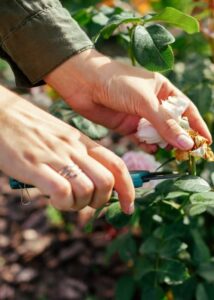 Deadhead both annuals and perennials throughout the rest of the season. Deadheading is simply the act of removing spent blooms. For some plants, this is done simply to improve appearance, but for others, it’s necessary to encourage more blooms.
- Keep an eye out for insect pests that are still working their way through your plants. There’s a really great web page, from The Ecological Landscape Alliance, that offers an immense amount of information on lots of insect pests found in gardens (even more than I included in last month’s newsletter). There’s probably far more information than most of us care about, but if you scroll through, you can find out a great deal about what might be eating your plants, and understanding what is doing the damage is key to controlling it. If you can identify the problem, I can probably help you decide what to do about it.
- As with veggies, make sure your flowers are getting the water they need. August tends to be a pretty dry, hot month, so be sure to supplement whatever water Mother Nature is providing, whenever we’re not getting enough rain.
- Regular weeding of your flower beds, just like with your vegetable garden, will help keep your gardens looking great, along with helping to keep your plants healthy. Weeds can harm your plants in a few ways – they rob your plants of water and nutrients, they can help to spread disease, and taller weeds can block sunlight from reaching your plants.
Birds:
- I have had a number of people ask about the disease that is affecting songbirds in many parts of the country. So far, Michigan does not seem to have as much of a problem with this, but the experts think it’s likely just a matter of time. To help keep our feathered friends healthy, please keep your feeders clean. Cleaning feeders on a regular basis can mean the difference between life and death for the birds visiting your yard. The Michigan DNR has a video explaining how to properly clean your feeders. This video was done a year ago, and under normal circumstance, the DNR recommends cleaning feeders once per month.
- As always, if you are feeding hummingbirds, clean out and replace the sugar-water in the feeders regularly. The Audubon Society recommends cleaning feeders twice per week during hot weather, and once per week when the weather is cooler.
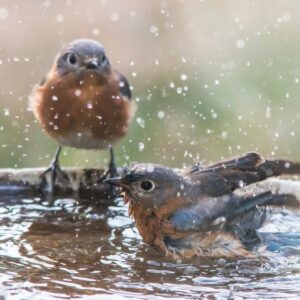
- Offering birds a source of water for drinking and bathing is a great way to attract them to your yard, and can provide you with lots of entertainment. Just be sure to clean out and fill your birdbaths daily to help keep the birds healthy, and to keep mosquitoes under control (or at least give them one less place to multiply!).
More info on all of these tips can be found in our monthly newsletter: Read the August 2021 issue of Let’s Get Gardening
Happy Gardening!

“Sidewalk Sales” is now “Fresh Air Market”
August 12th through 14th.
We’ll have end-of-season sales and specials, along with lots of great new merchandise throughout the store.
Don’t miss the Fashion & Home Show on Saturday, August 14th, beginning at 11am at Palmer Commons, and join in the Scavenger Hunt throughout downtown!
click on the image above for more details
Store News & Specials
$10 off $50 purchase coupon