
Let’s Get Gardening!
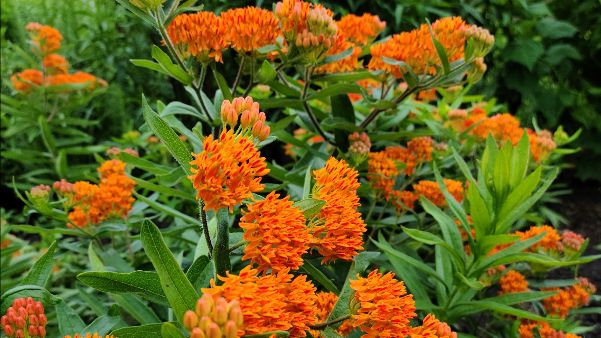
My grandmother always said that if you don’t have something nice to say (about a person), you shouldn’t say anything at all. So, I am not going to say anything at all about the weather in June! Instead, I will say how much I am enjoying my gardens. Everything is growing like crazy in my vegetable garden, and lots of things are starting to really bloom in my flower beds (the picture above is the butterfly weed in one of my gardens). The not-to-be-mentioned weather has apparently agreed with my gardens. I hope yours are doing as well! Oh – one mention of the weather I can’t let go. The frogs and toads are really enjoying it. I am finding frogs absolutely everywhere around my house, and I do mean everywhere! I came in from taking out the trash last night, and apparently had a hitchhiker! A gray tree frog jumped off of my pant leg and onto my sofa, giving me a momentary startle. Fortunately, I was able to grab it and usher it outside before my cats saw it. That would not have been pretty!
Jennifer
In this month’s issue of Let’s Get Gardening
Subscribe to our monthly newsletter for seasonal gardening advice and recommendations for your garden, yard, and bird feeding.
In this month’s issue:
I took a week away from the store last week, and I had a great time working in my yard and gardens. I got such a sense of accomplishment from all that I got done. Of course, there’s always more to do, but at least for a brief moment, I can feel like I am (almost) caught up! Here are some tips to help you stay caught up in your yard and gardens:
In the vegetable garden:
- July is the time when many insect pests are really wreaking havoc on vegetable gardens, so let’s talk about how to deal with them. First – it’s important to know that there isn’t a one-size-fits all solution. You need to know what’s eating your plants so you can be sure to use the proper controls. Here are some of the ones that might be causing you problems (and if there’s something eating your plants that I’m not covering here, please feel free to email, call, or stop in, and I will try to help you find a solution to what’s bugging your plants):
- Aphids generally hang out in large groups at the tips of stems (they like succulent, new growth best) and on the undersides of leaves. Aphids come in lots of colors, including green, black, yellow, orange, red, and white. A good squirt or two of insecticidal soap is all it takes to neutralize these pests, but you need to spray them directly for it to be effective.
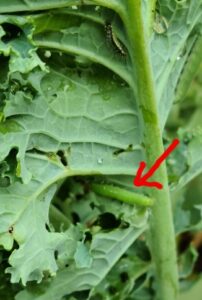 Cabbage moth caterpillars can easily be picked off of your plants and squashed. The hard part is finding them. Look for them on the undersides of the leaves (though they may also be on the tops), and look really closely – they are experts at camouflage.
- Colorado Potato Beetle eat the leaves of tomatoes, peppers, and
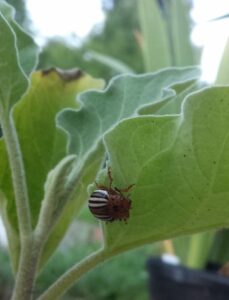 eggplant, as well as potatoes (and tobacco, but I’m guessing not too many of us are growing tobacco). They are difficult to control because they have developed resistance to almost all pesticides.
 - Cucumber Beetles come in two different versions – yellow with black strips and yellow with black spots – but the striped ones tend to be more prevalent in our area. These pests are a real problem for most plants in the cucurbit family (summer squash, winter squash, melons, pumpkins, and cucumbers – cucumbers being their favorites) in three different ways.
- Flea beetles and Mexican bean beetles are a difficult to deal with, because they are escape artists.
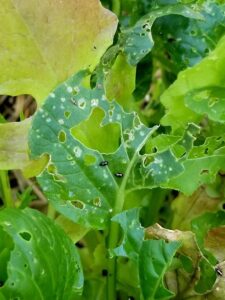 Flea beetles are tiny, black beetles that eat tiny holes in the leaves of your plants – it looks like somebody shot your plants with a bb gun. They eat a number of different plants, and are hard to spot. Mexican bean beetles pretty much just stick to eating bean plants.
 - Japanese Beetles are definitely one of the most hated garden pests. While they are a problem in both Vegetable gardens and flower gardens, I’ll address those below, in the flower garden section.
- Slugs are one of my least favorite creatures in the garden. Aside from the fact that they’re slimy and gross, they can do a lot of damage in the garden. Slugs mostly feed at night, because they dry out too easily in the sun. So, if you are seeing lots of damage to your plants that seems to show up overnight, and you can’t find any insects, you probably have slugs.
- Squash bugs and Squash vine borers are both very destructive of summer squash, winter squash, and pumpkins (and sometimes cucumbers and melons). Of the two, squash vine borers do the most
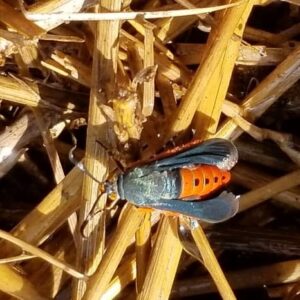 damage, and are the hardest to control. Two things can be effective in preventing the squash vine borer moth from laying eggs on your plants. The first is row covers. Cover squash plants with row covers or insect netting now, and secure them so that the adult moths can’t get under them (that’s one of them in my garden in this picture). Leave covers in place for about 2 weeks (though remove them sooner, if your plants are flowering, so that the flowers can be pollinated). The second option is to wrap tin foil over the base of the stems of your plants.
 - There are lots of different pests out there, and it’s impossible for me to try to cover them all here. If you’re not sure what’s eating your plants, send me pictures, or come in. I can often (though not always) identify the culprit from the plant that is being eaten and/or the damage that is being done. From there, we can come up with a potential solution.
- Weeds are also a big problem in gardens at this time of year, and keeping up with them can be a real chore!
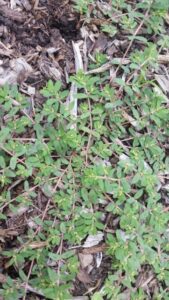 The best thing to do is to try to get them while they’re small, mostly because they are easier to pull out before their roots are too established. Since weeds compete for water and nutrition with the plants you want, don’t let them get out of control. At this time of year, crabgrass, knotweed, plantain, spurge, and thistle are the most prominent of the weeds. Of them thistle can be the hardest to deal with, but all pose their own special challenges. Not sure what you’re seeing in your garden? There are some good apps for smartphones that can help in identification – just snap a picture and upload it for identification. Among them, I have found Google Lens, Picture This, PlantSnap, and PlantNet to be very helpful, though some of them only allow you to ID up to a certain number for free.
 - Early in the month is a good time to side dress your summer crops – especially because of all the rain we’ve been getting lately, which can wash away fertilizers you put down earlier and can make it hard for your plants to take up the nutrients they need. Side dressing is just the simple act of giving your plants a mid-season boost of fertilizer.
- One very common issue with tomatoes, peppers, eggplants, and squash that occurs when we are getting the
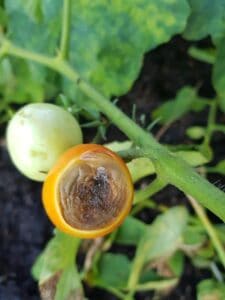 kind of rain that we have been seeing is blossom end rot. People are often led to believe that the problem is solved by adding calcium to their soil, but a lack of calcium is not always the problem. The problem is often that too much water (or even too little water, though that is not as common) makes it difficult for the plant to take up what calcium is in the soil.
 - Keep up with your program of fungicide spraying (or start one, if you haven’t yet). There are a lot of diseases that really get going as summer progresses, especially on tomatoes, cucumbers, and squash. Treating your plants with an organic fungicide on a regular basis can help keep them from succumbing to disease, which means that you might actually get to eat a lot of what you planted!
- July should be harvest time for many crops. Spring crops, such as lettuce, spinach, and peas will mostly finish producing this month, if they didn’t already bolt and go to see in the high heat we had early in June.
- Garlic is generally ready for harvest between the middle of July and early August, depending on the variety and when it was planted (fall vs. spring). If possible, stop watering your garlic about three weeks before you expect to be harvesting (I say “if possible” because none of us can control Mother Nature!).
- July is also a time for planting and starting new seedlings for fall harvest. If you want to have broccoli and cabbage for fall, start your own inside no later than July 10th, transplanting the seedlings into your garden when they are about six weeks old (don’t forget to slowly introduce them to the sun over the course of about a week before putting them into the garden, to avoid sun scorch).
- You can plant late season successions of lettuce, spinach, peas, beets, carrots, and Swiss chard at the end of the month, to be ready for picking before it gets too cold.
- I know that it sounds crazy right now, but don’t forget to water your veggie garden regularly as summer goes on. This rainy weather won’t go on forever (even though it might seem like it), and your plants generally need about an inch of water every week.
In the flower garden:
- Much like in the veggie garden, keeping insects under control gets to be more of a challenge as we move into
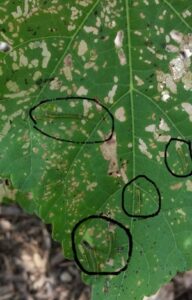 July. In my flower gardens, I’m seeing aphids on my asters, sawfly larva (pictured) on my hardy hibiscus, and Japanese beetles on everything! Insecticidal soap has been working well on the aphids and sawfly larva, but the best way to deal with Japanese beetles is to simply pluck them off the plants and drop them into a bucket of soapy water.
 - If you are using insecticides of any kind, be aware of when to apply them. Different insects are active at different times of day, and some pesticides work best if sprayed directly on the pest. Also, be aware of bee and butterfly activity in your flowers, and don’t spray any insecticides when you see them around, or at least do targeted spraying, instead of broadcast spraying.
- Additional pests I have been getting a lot of questions about controlling lately are rabbits and deer. They can do an enormous amount of damage in very little time, and are hard to control, because they are often out when you’re not. I cannot recommend Epic’s Deer Scram and Rabbit Scram enough for the control of these creatures. I have used both in my gardens for a number of years now, with great results!
- Be sure to fertilize roses throughout the month, but stop fertilizing at the end of the month to allow the new growth to harden off before winter.
- As in your vegetable garden, keep weeds under control in the flower garden, so they don’t compete with your flowers for moisture and nutrients.
- Cut back perennials that have finished blooming.
- To keep container annuals blooming all season long, be sure to fertilize them regularly. With frequent watering, fertilizer tends to get flushed out of the container, so regular feedings are a must.
- Keep an eye on watering needs for all your plants. It’s easy to get complacent with all the rain we’ve had. Before you know it, the rain will have stopped and the sun will be beating down and drying everything out again.
- Once Mother Nature does turn off the faucet, keep an eye on any trees and shrubs you have planted this year (and really any that were planted in the last two to three years). It takes a while for their roots to become efficient at taking up water from the soil, so making sure that they are well watered is essential to ensuring their success.
- Do not apply fertilizer to trees or shrubs after the 4th of July, in order to avoid a flush of new growth late in the summer that doesn’t have time to harden before winter.
- Finish up pruning of trees and shrubs this month or early next. Pruning too late in the season can also encourage new growth that will not have time to harden off before winter sets in.
- When you’re out working in your gardens and yard, keep an eye out for ground-nesting wasps and yellow jackets. They don’t take well to having their homes stepped on, sat on (as I almost did the other day), or run over with lawn equipment, and will let you know in a hurry. I am generally a big proponent of the live-and-let-live approach to these creatures, but if they are in areas where they pose potential harm, especially to someone who is allergic, eliminating them may be necessary – and can be done relatively easily, without chemicals.
Lawn:
- When mowing this summer, leave your grass between 3 and 4 inches tall, and only cut off the top third of the blades at each mowing. Keeping your grass a little higher will help it retain moisture during the hot, dry summer we usually have, and will help suppress weeds.
- The larva of those nasty Japanese beetles we’ve been talking about are the grubs that will be eating your grass roots later in the season, causing patches of brown, dead grass that, unlike grass that is dormant, won’t be growing back.
For the Birds:
- Keep your birdbaths full and consider putting out additional baths or even filling things like overturned trash can lids or large saucers with water for them. The dry conditions we generally have in summer are as difficult on birds as on our gardens, and they are going to be looking for water wherever they can find it.
- Keep hummingbird feeders cleaned out and filled. Sugar water left out in the heat for a number of days can breed bacteria that is harmful to the beautiful birds visiting your feeders, so be sure to clean them out every few days.
More info on all of these tips can be found in our monthly newsletter: Read the July 2021 issue of Let’s Get Gardening
Happy Gardening!

Join Us In Celebrating Independents Week!
Independents Week is a time to celebrate and support all the great local, independently-owned businesses in Chelsea.The #shopchelseamich independent merchants will be dressing up their windowfronts in celebration of INDEPENDENTS! And you will have a chance to participate by voting for the storefront that most effectively displays:
Best use of color
Best alignment with the theme (Red, White & Blue)
Most imaginative
Voting begins on July 4 and runs through July 10. You can go to the shopchelseamich website to see who is participating and cast your vote!
Store News & Specials
$10 off $50 purchase coupon